
Showing posts with label Reading. Show all posts
Showing posts with label Reading. Show all posts
25 March 2014
The Gilmore Challenge
I can't say I entirely agree with all of Rory's tastes, but it's hard not to be delighted that Australian writer Patrick Lenton has compiled a comprehensive list of every book mentioned in the series run of Gilmore Girls. Over seven seasons, the total is over 300. That averages to about 49 books per year, or roughly one per week. Life of Johnson certainly isn't helping me keep pace! Quality over quantity.
17 March 2014
'A Pound of Flesh, Or An Eye for An Eye': At the Crossroads of Empathy and Forgiveness
 |
| Hard times in the Chateu D'If |
Societal reaction to the priestly abuse scandals is emblematic of the strange concept of justice that we've come to expect in our modern world. Many allegations have be made over the past decade with financially and legally exploitative motivations, some of them truthful. But in most cases we hear over and over again how victims want not only emotional and spiritual healing, but also financial restitution. The mystery of how we expect large sums of money to heal such rifts is a topic for another post, another day, but it's certainly not reserved for clergy sexual abuse. Divorce? My ex has to pay. College degree didn't get me a job? My school has to pay. Short-changed childhood experience? Parents have to pay. Bakery won't make a cake for my wedding? The owners have to pay. The litigiousness is astonishing, especially here in the U.S., where "fighting for what you deserve" seems to reach new levels of ridiculousness every day.
It's even more ridiculous given that 'tolerance' has become the new global mantra. Here's the world, beating it into us that 'live and let live' is the only noble way to engage with society and build peace, while simultaneously demanding an eye-for-an-eye at the turn of every petty (and not-so-petty) disappointment. Strangely Old Testament for a world that seeks to free us from ancient oppressive moral codes.
As I read and thought over the past several months, I have chewed on this topic often. Why are we always at odds with each other? Why are we never satisfied? The human urge for revenge is certainly not reserved to the modern world-some of the greatest stories ever written have revenge at their very core (Hamlet, Coriolanus, and The Count of Monte Cristo among them). But the modern kind seems to be particularly insatiable. The strange realities of our world's sense of 'practical justice' seems to dovetail with something else often present in my intellectual cud-our similarly distorted understanding of forgiveness.
21 February 2014
Immediate Book Meme
(DarwinCatholic started it, Happy Catholic passed it on, so...what the heck?)
1. What book are you reading now?
2. What book did you just finish?
Thinking Fast and Slow, by Daniel Kahneman. I don't usually mind long books, but man, even good psychology can be a drag. I triumphantly finished the audio today after pushing through it on my drives for the past 3 weeks.
3. What do you plan to read next?
I just picked up Robert Edsel's Saving Italy: The Race to Rescue A Nation's Treasures from the Nazis from the library.
4. What book do you keep meaning to finish?
5. What book do you keep meaning to start?
I've picked up Whitman's Leaves of Grass on numerous occasions, but the right time hasn't come yet.
6. What is your current reading trend?
WWII history/libraries/art, I guess? Monuments Men started me on a tear, and I have a brand new beautiful coffee table book from the Newberry Library sitting on my side table.
17 October 2013
Neil Gaiman: Why Our Future Depends on Libraries, Reading, and Daydreaming
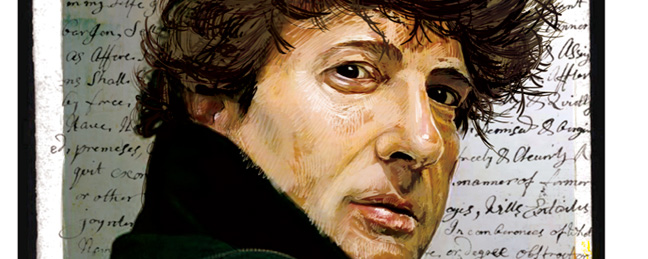
For the 'reasons to read fiction' files:
"...the second thing fiction does is to build empathy. When you watch TV or see a film, you are looking at things happening to other people. Prose fiction is something you build up from 26 letters and a handful of punctuation marks, and you, and you alone, using you imagination, create a world and people it and look out through their eyes. You get to feel things, visit places and worlds you would never otherwise know. You learn that everyone else out there is a me, as well. You're becoming someone else, and when you return to your own world, you're going to be slightly changed.
Empathy is a tool for building people into groups, for allowing us to function as more than self-obsessed individuals."
On the digital divide:
"I do not believe that all books will or should migrate onto screens: as Douglas Adams once pointed out to me, more than 20 years before the Kindle turned up, a physical book is like a shark. Sharks are old; there were sharks in the ocean before the dinosaurs. And the reason there are still sharks around is that sharks are better at being sharks than anything else is. Physical books are tough, hard to destroy, bath-resistant, solar-operated, feel good in your hand; they are good at being books, and there will always be a place for them."
And more:
"We writers -- and especially writers for children, but all writers -- have an obligation to our readers: it's the obligation to write true things, especially important when we are creating tales of people who do not exist in places that never were -- to understand that truth is not in what happen but what it tell us about who we are. Fiction is the lie that tells the truth, after all."
Related: MIT scientists discuss the importance of science fiction in nurturing inventors.
28 July 2013
Review: The Good Reading Guide (Free Trial!)

Sometime in the middle of last summer, I was very interested to hear of the existence of a new book-reviewing initiative on the web. The Good Reading Guide grew out of a small family-run bookstore in Australia in 2011, as an effort to facilitate personal reading selection in sync with the respect of human dignity.
Here is The Good Reading Guide's reviewing philosophy:
At the Good Reading Guide we believe that books can have a significant impact on a person Just as people thrive in a society that recognizes their dignity, so can they thrive when their reading material in some way reflects this dignity, and if possible, enhances their understanding of it.
We aim to source literature that is of quality in both style and substance. Structure and vocabulary should be at a sufficient standard, characters well-developed and believable, plots engaging and themes appropriate for the intended reader of each book. We recommend books that contribute to readers' culture and character and are broadly compatible with Christian values, but more than just seeking 'clean' books we aim to recommend books that will enrich the lives of readers in at least one of the following areas:
Culture: we seek books that build culture by expanding the world of the reader and teaching them new things, helping them to see beyond a superficial vision of life;
Humanity: we try to select books that help readers to deepen their understanding of humanity by 'living in someone else's shoes' for a time;
Language: we look for books that enhance readers' language and logical reasoning; and
Character: we seek books that help to build character by offering criteria for developing maturity in judgement and action.
09 June 2013
The Roman Canon, Comfort, and the Communion of Saints

Of all the variations of liturgy that we hear today, the one that puzzles me the most is a habitual over-use of Eucharistic prayers that omit the Roman Canon. I always tend to notice this acutely when I'm in a spell of loneliness, as I was recently. There are many things the mind and spirit strive to do when one is craving company, and at the right moments, the reassurance of needed friends can be found in the persons of the imagination, only found in the fictions of stories. Thus, books can sometimes be a welcome antidote to loneliness, providing us with an invisible sustaining comfort. But often books cannot cure the problem. I recently found myself in a funk that would not be appeased by stories of any kind, their comforts more illusory than ever. Both the beauty and curse of books (and television) is that they cannot talk back.
But without fail, I was relieved (as always) when I went to Mass and heard:
"...the glorious ever-Virgin Mary, Mother of our God and Lord, Jesus Christ, and blessed Joseph, her spouse, your blessed Apostles and Martyrs, Peter and Paul, Andrew, James, John, Thomas, James, Philip, Bartholomew, Matthew, Simon, and Jude; Linus, Cletus, Clement, Sixtus, Cornelius, Cyprian, Lawrence, Chrysogonus, John and Paul, Cosmas and Damian, and all your Saints..."
And if that wasn't enough:
"...graciously grant some share and fellowship with your holy Apostles and Martyrs; with John the Baptist, Stephen, Matthias, Barnabas, Ignatius, Alexander, Macellinus, Peter, Felicity, Perpetua, Agatha Lucy, Agnes, Cecilia, Anastasia, and all your Saints; admit us, we beseech you, into their company..."
And just like the crucial cheering party towards the end of a race, here is the roll call of the Church Triumphant, reminding me that I am far from alone. There are real stories-the most spectacular stories-of saints and martyrs, that we don't have to imagine. There is a certain virtue of the imagination that we need to practice faith and hope, but it is an in sufficient substitute. The written word can rightly act as a catalyst for true comfort, but in the end, the Word that became flesh gives us to most real reassurance.
22 March 2013
Head in the Sand...

Sisyphus, Titian
Goodness, it's been a while. But they say that a neglected blog is a sign of a full life, right? Among other things, the non-blogging adventures that have occupied the last month or so have included moving. Again. If you include the times I have changed residences within cities, I have moved eight times in the just-under three years since I finished college. To say that I am eager to settle down is an understatement.
Among the things that preoccupy me far more than they should during the moving/settling in process is how much it disrupts reading. Notice how the thumbnail at the right has not moved since December. The whole planning-moving-post-moving process and its corresponding practicalities have siphoned off most of my reading time and energy, which is significant, considering my usual manner. One would think Lent would help to remedy this problem. But both slowing down and interior silence have been hard to come by recently. I spend my drive home nearly every day contemplating the large stack of delicious books sitting by my armchair at home, only to collapse into bed shortly after dinner, due to body, mind, and soul fatigue.
This hasn't been helped by the fact that I've had to trade my train ride for a car ride, which has really been a cramp in the daily reading time to which I'd been accustomed. Thankfully, I am slowly being rescued by Julie and Scott at A Good Story is Hard to Find. Listening on my commute is beginning to feel like riding home with lovable, bookish friends. I've enjoyed re-living books and stories I read ages ago, and being reminded of titles that have been long-buried in the depths of my reading list. I'm so glad they do movies too. I finally feel vindicated after all those years of burdening my movie-going friends and siblings with irrepressible post-credit analysis. I foresee that I'll soon be venturing into the exciting world of audiobooks.
Soon, I hope, I'll be able to stop dragging the boulder up the mountain and slide gleefully down the other side.
15 February 2013
The Deceit of Reading and Moral Seriousness
I opened my computer this morning to find this fascinating pair of pieces from First Things and the New Yorker, two great additions to my 'philosophy of reading' files. In the latter, Teju Cole chronicles his initial hope, and then disappointment, in our most recent 'literary president':
Barack Obama is an elegant and literate man with a cosmopolitan sense of the world. He is widely read in philosophy, literature, and history-as befits a former law professor-and he has shown time and again a surprising interest in contemporary fiction...We had, once again, a reader in chief, a man in the line of Jefferson and Lincoln...
The plain fact is that our leaders have been killing at will.
How on earth did this happen to the reader in chief? What became of literature's vaunted power to inspire empathy? Why was the candidate Obama, in word and in deed, so radically different from the President he became? In Andrei Tarkovsky's eerie 1979 masterpiece, "Stalker," the landscape called the Zona has the power to grant people's deepest wishes, but it can also derange those who traverse it. I wonder if the Presidency is like that: a psychoactive landscape that can madden whomever walks into it, be he inarticulate and incurious, or literary and cosmopolitan.
28 January 2013
An Austen Anniversary

"I declare after all there is no enjoyment like reading! How much sooner one tires of any thing than of a book! --When I have a house of my own, I shall be miserable if I have not an excellent library."
-Jane Austen, Pride & Prejudice
Happy 200th!
13 January 2013
The Mystery of Reading

Fra Angelico, The Conversion of St. Augustine
"We must never assume that we now exactly what is happening when anyone else reads a book...The same book can move another's will and understanding differently than it does our own. We ourselves are receptive to different books at different times in our lives. It is quite possible for one to get nothing out of reading a book, whereas someone else, reading the same book, goes out and changes the world. Likewise we can be excited by reading a book that our friends find dull. There is a mystery here of how mind speaks to mind through reading."
-C.S. Lewis & Fr. James V. Schall, The Life of the Mind
31 December 2012
2012: Books in Review
 |
| Always carry a sword an a book-it worked for St. Catherine. |
2012 is almost at its end. It has been an interesting, and at times, sporadic, reading year. I'm not about to offer a litany of book reviews, first because I tend to have lengthy opinions about nearly everything I read, but also because I have this terrible habit (or wonderful, depending on how you look at it), of moving on so quickly to the next book that book reviews get neglected (save my personal notes). But here is a rough approximation of what I read in 2012, in no particular order (* indicates titles I have started):
Eugenics and Other Evils, G.K. Chesterton
On Being Human, Bl. Fulton Sheen
Born to Run: A Hidden Tribe, Superathletes, and the Greatest Race the World Has Ever Seen, Christopher McDougall
Quiet: The Power of Introverts in a World That Can't Stop Talking, Susan Cain
Self-Abandonment to Divine Providence, Jean-Pierre de Caussade
03 December 2012
02 December 2012
Book Apocalypse-Not Now
Almost as soon as e-books came on the scene, there have been talks of the demise of the book as we have long known it. These doomsday predictions are far from being true. While rapid technological reform (a more accurate term than 'progress' I think) has become the norm in today's world, it is far too soon to make such a forecast about books. E-books have been on the market in a significant way since just the mid-2000s; the codex has existed in virtually unchanged form for more than 1,500 years. In just that short time, we have already discovered that the amazing convenience and storage capacity of e-readers come with a price, with draconian (i.e. anti-sharing and ownership) DRM policies and rapid generational updates ensuring that e-readers function without some of the most useful features of the traditional codex.

While I am quick to refute those who claim the traditional book has run its course, I am often disappointed by the overly-sentimental apologias that are usually put forward by defenders of the traditional codex. The chorus of sappy humanists defending books on the basis of emotional significance and sensory experience (see here and here) does contain a few grains of truth, but books don't need such a subjective appeal in their defense. It makes for nice drama and all, but the traditional codex will not continue to endure because of its emotional power (or use as an ironic prop), but rather due to their remarkable technological persistence. The practical value of books lies in their function and design-not aesthetics.
13 November 2012
Less is More

Unlimited data. All-you-can-eat buffets. Endless credit. Unlimited streaming. Hundreds of channels. Bottomless pasta bowls. We hear a seemingly endless litany of 'no limits' every day (if only health insurance companies would join the chorus!). It seems that the principle of boundlessness is now being practiced by many public libraries, which continue to enforce increasingly generous item limits. I am sure it is a boon to the amateur armchair scholar with no access to a university library, but I am not sure how one manages to enjoy 21 CDs or 10 books at a time.
I used to be rather Spartan-esque in my commitment to reading only one book at any given time, imagining that my reading life could practically exist in a vacuum, unlike my day-to-day adventures. I have relaxed a bit since then, letting the various chunks of story and ideas freely fertilize one another. But I have also long since observed a limit of not reading more than two or three books at a time (exceptions always for articles and letters, of course). This also applies to buying books, which has, needless to say, saved me a countless amount of money. There is something tremendously liberating about focusing on just a couple texts at a time. For a time, even if just a few moments, one is free from the frenetic cadence of micro-consumption that dominates many of our reading lives (just about everyone reads everyday, but it usually consists more of status updates, tweets, and headlines than multi-stanza poems, encyclicals, and novels). Instead of skipping across the water, one is allowed to relax and swim around.
I still have not mastered the practice of carrying only one book in my handbag at all times, and I likely never will. But observing these limits has often saved me from the easy trap of endless meta-experience, in which I see that something is happening, but don't give half a moment's thought to what I am seeing or what it means. Trapped in meta-experience, our thoughts and consciousness resemble the input/output of computational machines more than those of a personal being capable of practical reasoning. Meta-experience not only allows one to observe a phenomenon from the outside, but this is only something that we can do outside of our individuality. I have always had a special admiration and appreciation for authors and thinkers who have treated literature and philosophy as a marriage of disciplines, rather than two separate subjects. The reason for this is that ideas cannot exist practically without their arena. Plato did not write treatises-instead he composed dialogues, in which philosophy was being worked out in the 'atmosphere' so to speak. Reading remains a barren and de-personalized experience when circumstances turn it into mere consumption. 'Reading' is distinct from consumption and computation precisely because it involves our personal relation to the text. If we wish to remain a culture of readers, we must ensure that we abide by limits that keep our humanity incheck.
19 September 2012
Catholic Speaker Month: Alice von Hildebrand
Before the entire month gets away from me, I'd like to take some time to welcome any new readers in observance of Support a Catholic Speaker Month, organized by Brandon Vogt. It is my pleasure to introduce you (or re-introduce you) to Dr. Alice von Hildebrand, who is a favorite speaker and writer of mine.
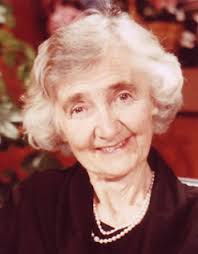 I first encountered Alice myself when she spoke a few years ago at a conference sponsored by the Right-to-Life Club at my alma mater. She spoke with passion about the pains, both socially and spiritually, that abortion has caused, and continues to cause, in our society today. She is a petite little lady, but she has a lively spirit about her. Not one to draw attention to myself, I didn't immediate introduce myself to her after her talk. But as luck would have it, a large number of students involved in organizing the conference were obligated to attend a wedding that same evening, which left only myself and a good friend of mine available to take her out to dinner and return her to the airport the next day. It was a delight to listen to her more throughout our hearty Italian meal as she spoke about Aristotle and friendship, and especially her husband, Dietrich, about whom she speaks with joyful admiration (more about him later). It was also quite a sight to see her ride shotgun in my friend's bright red Ford Mustang on the way to her flight.
28 August 2012
More Awesome People Reading...
As I am still buried in things both at the office and at home due to moving, here is a delightful photo to make up for my lack of writing (H/T Julie D.). Like Happy Catholic, I also admire Matt Damon.

13 August 2012
Who is John Galt?
Since the announcement of Paul Ryan as Mitt Romney's running mate late last week, the ever-blazing fire of political hysteria has had a fresh burst of fuel. Luckily, we will not discuss politics on this blog. We shall leave that unpleasant pastime to other blogging heads. But what is pressing my buttons is all the hysteria that is being generated about Paul Ryan's relationship with Randian literature. I know very little about the extent and exact nature of the influence of Ayn's canon on Ryan's politics. I have sampled a few anecdotes. Far and wide, people are crying fowl that Ryan has demonstrated positive interest in Rand's works. And then denying their influence on him-or not?
Now really, I could read as much as my puny litter grey matter could handle and I still wouldn't know up from down about the whole truth of the interior life of this country's dear politicians. But suffice it to say, I've already become annoyed at some who have severely recoiled at Ryan's association with Rand, as if reading a book and finding it fascinating and insightful somehow generates incurable Objectivist cooties. Ryan certainly got some measure of excitement from Rand, but his interest does not appear to be fanatical. I don't deny that Rand's Objectivism is downright frightening, but I don't think Ryan's significant engagement with her writing should necessarily alarm folks. I may stand corrected as I do my duty and reluctantly listen to more political banter as this election season progresses, but I think the general public is wrong to use Ryan's Rand connection to impulsively label him an enemy of the people (IMH non-political opinion).
| Really, Atlas is just holding his head in his hands and weeping about the modern state of political discourse. |
08 August 2012

07 August 2012
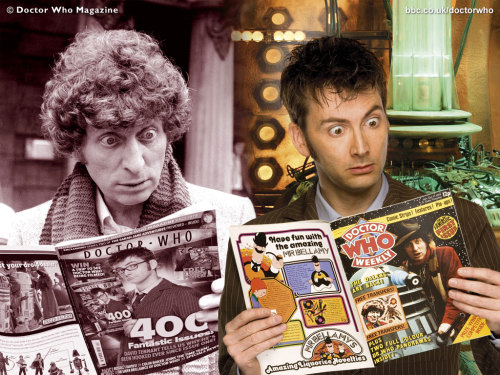
Reading is My Drug
"It's a dangerous business, Frodo, going out your door. You step onto the road, and if you don't keep your feet, there's no knowing where you might be swept off to."
-J.R.R. Tolkien, The Lord of the Rings
But more and more recently, I have been noticing just how easy it is to become a slave to reading. It's not just for books anymore. Reading material is everywhere these days-in our books, on our phones, on billboards, in the doctor's waiting room, and our computer screens. I am generally a voracious reader under normal conditions, but when stress is added to that mix, I am especially susceptible to reader's binge. Somehow, I have still not perfectly mastered control over the backwards instinctual logic that attempts to remedy stress and excessive mental preoccupations with adding yet more preoccupations to the mix. In the midst of perusing too thoroughly the latest in the Catholic blogosphere, my Twitter feed, the newly arrived issues of professional association publications, and the rest of todays news, and eyeing the books on my tea-tray, I had to stop myself.
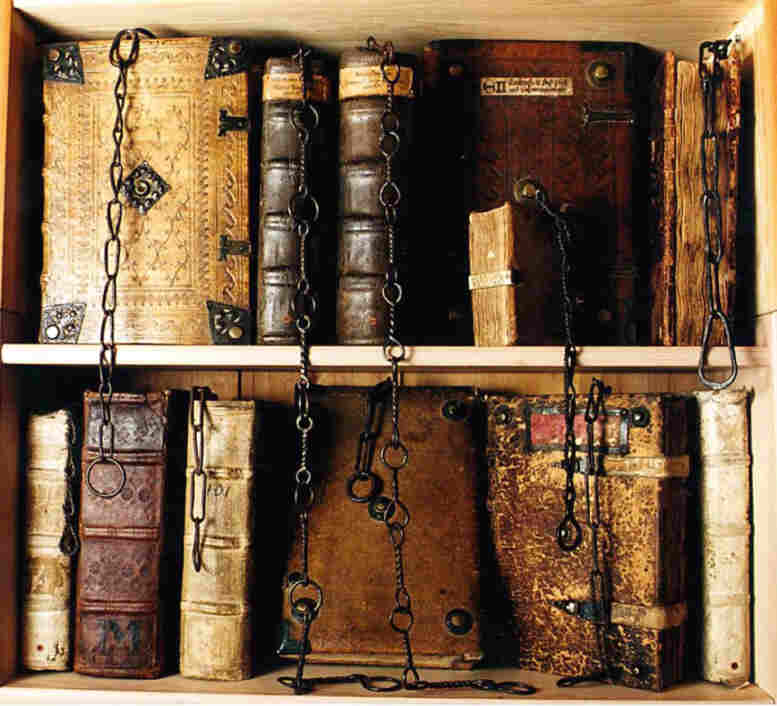 |
| Sometimes we are more chained too books than we realize. |
Subscribe to:
Comments (Atom)