Showing posts with label Quotes. Show all posts

26 January 2015

Knowledge & Imagination


"Collecting facts is important. Knowledge is important. But if you don't have an imagination to use the knowledge, civilization is nowhere."

-Ray Bradbury

11 August 2014

God as Watermark


"God writes his name on the soul of every man. Reason and conscience are the God within us in the natural order. The Fathers of the early Church were wont to speak of the wisdom of Plato and Aristotle as the unconscious Christ within us. Men are like so many books issuing from the Divine press, and if nothing else be written on them, at least the name of the  Author is indissolubly engraved on the title page. God is like the watermark on paper, which may be written over without ever being obscured."

-Venerable Fulton J. Sheen, 'Life of Christ'


02 February 2014

Before Goundhog Day: Candlemas


"That's all very beautiful, you might be saying to yourself, but how can my heart - stony as it is, be illuminated by the light of the Holy Spirit? Let's take the candles we have received today as an example. How does a candle produce its light? By being consumed. The fire consumes the wax. The fire of love consumes our very substance - sacrificial love. I mean, radical self-giving, death to self. Don't be afraid of giving your life completely to God. We will shine with a great light if we allow ourselves to be consumed by a greater light: the light of Christ who, after being totally extinguished on the cross, blazed up in the glory of the Resurrection, an undying light which shines, radiates, casts light on all the world, now and always and forever and ever. Amen."

-Homily from Norcia monks, 2011 (read more here)

It's not often that I've seen Candlemas customs actually observed in parishes (likely due to fears of once again putting fire into the hands of the entire assembly for nearly the whole Mass...I haven't seen a church burn down yet), so I was so glad to have Sunday Mass by candlelight this morning. I love the myriad shades of symbolism of the flame: Christ as light of the world, hope, all-consuming love, the Holy Spirit, purgatorial fire. Real flame consumes our attention too - how fixated we are on our slender tapers until we can extinguish them at Communion, just as our attentions should be fixed on the true light. It wasn't until very recently that I learned of Candlemas as Groundhog Day's long predecessor. As much as Punxsutawney Phil provides a fun little annual ritual, Groundhog Day seems to flip the meaning of the day on its head. Rather than rejoice in the hope of new light (whether winter stays for 6 more weeks or not), we tend to fixate on the groundhog's fear - for an abundance of light will surely scare him back into his hole. Our hope is not predicated on chance, but on the real Light of the World.

22 January 2014

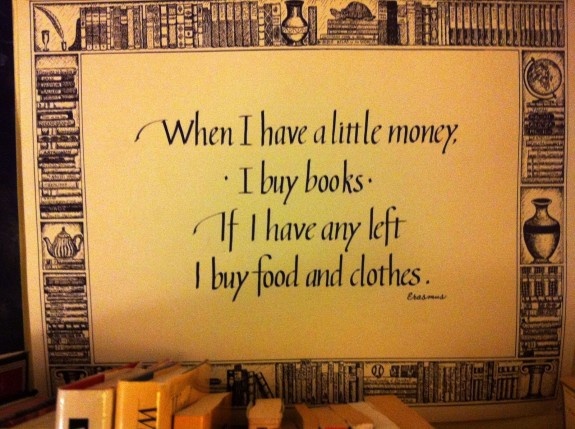
The Best Kind of Intellectual Wallpaper


Certainly something I wish everyone who doesn't keep books in their house would understand.

17 October 2013

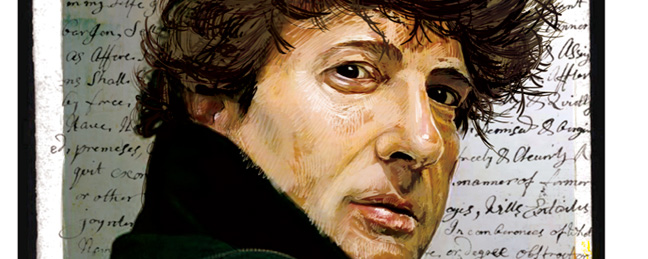
Neil Gaiman: Why Our Future Depends on Libraries, Reading, and Daydreaming


For the 'reasons to read fiction' files:

 "...the second thing fiction does is to build empathy. When you watch TV or see a film, you are looking at things happening to other people. Prose fiction is something you build up from 26 letters and a handful of punctuation marks, and you, and you alone, using you imagination, create a world and people it and look out through their eyes. You get to feel things, visit places and worlds you would never otherwise know. You learn that everyone else out there is a me, as well. You're becoming someone else, and when you return to your own world, you're going to be slightly changed. 

Empathy is a tool for building people into groups, for allowing us to function as more than self-obsessed individuals."

On the digital divide:

"I do not believe that all books will or should migrate onto screens: as Douglas Adams once pointed out to me, more than 20 years before the Kindle turned up, a physical book is like a shark. Sharks are old; there were sharks in the ocean before the dinosaurs. And the reason there are still sharks around is that sharks are better at being sharks than anything else is. Physical books are tough, hard to destroy, bath-resistant, solar-operated, feel good in your hand; they are good at being books, and there will always be a place for them."

And more:

"We writers -- and especially writers for children, but all writers -- have an obligation to our readers: it's the obligation to write true things, especially important when we are creating tales of people who do not exist in places that never were -- to understand that truth is not in what happen but what it tell us about who we are. Fiction is the lie that tells the truth, after all."

Read the whole thing here.

Related: MIT scientists discuss the importance of science fiction in nurturing inventors.

03 September 2013

Malala Yousafzai: "Books Are Very Precious"


"Pens and books are the weapons that defeat terrorism. I truly believe the only way we can create global peace is through educating not only our minds, but our hearts and souls. This is the way forward to our destiny of peace and prosperity.

Dear sisters and brothers, Books are very precious. Some books can travel you back centuries and some take you into the future. In some books, you will visit the core of your heart and in others you will go into the universe. Books keep ones feelings alive. Aristotle's words are still breathing, Rumi's poetry will always inspire and Shakespeare's soul will never die.

There is no better way to explain the importance of book than to say that even God chose the medium of a book to send His message to His people."

Read more here.

28 August 2013

The Quotable Flannery O'Connor


"I write the way I do because (not though) I am a Catholic. This is a fact and nothing covers it like the bald statement. However, I am a Catholic peculiarly possessed of the modern consciousness, that thing Jung describes as unhistorical, solitary, and guilty. To possess this within the Church is to bear a burden, the necessary burden for the conscious Catholic. It's to feel the contemporary situation at the ultimate level. I think that the Church is the only thing that is going to make the terrible world we are coming to endurable; the only thing that makes the Church endurable is that it is somehow the body of Christ and that on this we are fed. It seems to be a fact that you have to suffer as much from the Church as for it but if you believe in the divinity of Christ, you have to cherish the world at the same time that you struggle to endure it."

-From a letter to 'A,' 20 July 1955

28 July 2013

Virgin Mary: Book of the Word of God


"The Virgin Mary is called βιβλος του λογου της ζωης (the "book of the Word of life") by the Greek Church. The book of the Gospel, the book of Christ's origins and life, can be written and proclaimed because God has first written his living Word in the living book of the Virgin's being, which she has offered to her Lord in all its purity and humility-the whiteness of a chaste, empty page. If the name of Mary does not often appear in the pages of the Gospel as evident participant in the action, it is because she is the human ground of humility and obedience upon which every letter of Christ's life is written. She is the Theotokos, too, in the sense that she is the book that bears, and is inscribed with, the Word of God. She keeps her silence that he might resonate the more plainly within her."

-Erasmo Leiva Merikakis, Fire of Mercy, Heart of the Word: Meditations on the Gospel According to Matthew

21 July 2013

"We Must Protect Our Souls With the Sword of the Spirit"


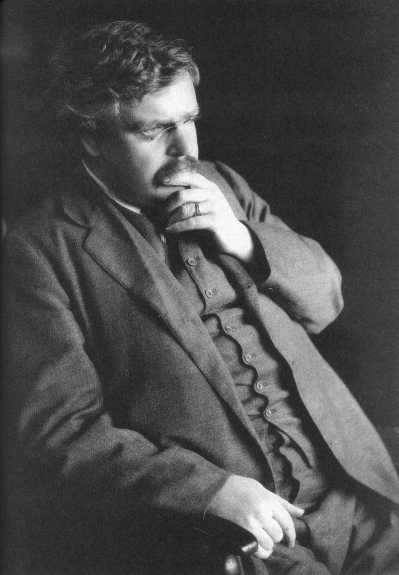
"Ann Veronica is not an immoral book in any imaginable sense; but that is not the primary point. The primary point is that, that it is no business of the State or of any coercive power to suppress immoral books. The business of any coercive and collective power is to suppress indecent books; books that violate fixed verbal and physical custom in such a way as to be a public nuisance. We have a right to be guarded against bodily indecency as against bodily attack; but do not let us call in the police to protect our souls; we must protect our souls with the sword of the spirit. If once I am to test books by whether I think them profoundly and poisonously immoral, I could furnish a very long list to the police. I should at once ask the magistrates to forbid the sale of Froud's History of England, Burke's French Revolution, Hobbes's Leviathan, Smiles's Self-Help, Carlyle's Frederick the Great, all the works of the Imperialists, Eugenists, Theosophists, and Higher Thinkers, and at least half the works of Socialists and of Jingoes. If once we begin to speak of whether things do harm to men's souls, our Index Expurgatorious will begin to fill the British Museum. Ann Veronica  does not urge immorality; it does not urge anything; it intentionally ends with a note of interrogation. I myself even read it as a note of irony; the upshot of the tale, if anything, seemed to me to be rather against modern revolt that in its favor...But the question is not whether my spiritual version is correct; the question of indecency is, comparatively speaking, a question of fact. And the fact is that the book is no more indecent than Bradshaw...Suppose that it were (as it is not) spiritually evil; suppose it were as profligate as Froude or as foul as Smiles and Self-Help, the point is that these spiritual repugnances must not be enforced politically, or we shall lose the very name of freedom."

-G.K. Chesterton, Daily News, 12 February 1910 (via Gilbert Magazine) 

21 April 2013

The Limits of Human Charity


"'But, hang it all,' cried Mallow, 'you don't expect us to be able to pardon a vile thing like this?'

'No,' said the priest; 'but we have to be able to pardon it.'

He stood up abruptly and looked round at them.

'We have to touch such men, not with a barge pole, but with a benediction,' he said. 'We have to say the word that will save them from hell. We alone are left to deliver them from despair when your human charity deserts them. Go on your own primrose path pardoning all your favourite vices and being generous to your fashionable crimes; and leave us in the darkness, vampires of the night, to console those who really need consolation; who do things really indefensible, things that neither the world nor they themselves can defend; and none but a priest will pardon. Leave us with the men who commit the mean and revolting and real crimes; means as St. Peter when the cock crew, and yet the dawn came...'

'You say that you could not commit so base a crime. Could you confess so base a crime?'"

-G.K. Chesterton, The Chief Mourner of Marne

13 April 2013

Roosevelt Island: Confrontational Reading

I rarely ever carry my camera with me, especially on long runs and hikes (too much looking through the lens instead of at what's in front of it), but I wish I had brought it along on my run this morning. On my trek over the river, I spent some time at the Theodore Roosevelt Memorial on the island. Flanking the central statue of Roosevelt himself are four giant stone panels with some of his most memorable words. A nice little hidden inspirational place. Below is an image of one of the panels. I have reproduced the text of the others below. I was so struck by the timeliness of Teddy's proverbs. Hardly anyone seems to favor 'righteousness over peace' anymore. Conservation, both in respect to natural resources and intellectual and cultural heritage, continues to have a reputation as a static, rather than dynamic activity. And the world, in various regions, seems unduly obsessed with 'order without liberty' and promoting 'liberty without order.' I just love how the bold and chiseled words confront and challenge the viewer so directly (each panel is probably taller than 20'). I think public sculpture plays a surprisingly important role in nurturing contemplation, especially when books are increasingly being sold and consumed as entertainment.


MANHOOD

A man's usefulness
depends upon his living up to
HIS IDEALS
in so far as he can

21 February 2013

Chesterton on Fairy Tales

"Fairy tales, then are not responsible for producing in children fear...The baby has known the dragon intimately ever since he had an imagination. What the fairy tales provides for him is a St. George to kill the dragon. Exactly what the fairy tale does is this: it accustoms him for a series of clear pictures to the idea that these limitless terror had a limit, that these shapeless enemies have enemies in the knights of God. That there is something in the universe more mystical than darkness, and stronger than strong fear."

-G.K. Chesterton

On a related note, check out this archived podcast discussion on censoring Harry Potter, from Julie and Scott at A Good Story is Hard to Find.

28 January 2013

An Austen Anniversary


"I declare after all there is no enjoyment like reading! How much sooner one tires of any thing than of a book! --When I have a house of my own, I shall be miserable if I have not an excellent library."

-Jane Austen, Pride & Prejudice

Happy 200th!

13 January 2013

The Mystery of Reading

Fra Angelico, The Conversion of St. Augustine 

"We must never assume that we now exactly what is happening when anyone else reads a book...The same book can move another's will and understanding differently than it does our own. We ourselves are receptive to different books at different times in our lives. It is quite possible for one to get nothing out of reading a book, whereas someone else, reading the same book, goes out and changes the world. Likewise we can be excited by reading a book that our friends find dull. There is a mystery here of how mind speaks to mind through reading."

-C.S. Lewis & Fr. James V. Schall, The Life of the Mind

02 January 2013

Life is a Mystery...


Fortunately, the quotation above doesn't significantly apply to me (but I do avoid shopping malls like the plague and only cook because I would starve otherwise). All in all, I am a pretty temperate book-buyer. I add to my personal library in small bits, but I make extensive use of libraries, and occasionally borrow interesting titles from friends. Goodness knows I would love more books. Yet every Christmas I am left in a familiar state of bewilderment when I am given no new tomes to carry gleefully home.

I know it is vain to complain about gifts. But yes, you heard that right-my family, my own dear family, rarely gives me books as Christmas gifts.

24 October 2012

Feast Day Bookishness

"If people do not have good books they will read bad ones. Books are the food of the soul, and just as the body is nourished by wholesome food and harmed by poisonous food, so it is with reading and the soul."

-St. Anthony Mary Claret


10 October 2012

There are books everywhere...

"There are books everywhere and only a few are necessary."

A.G. Sertillanges


19 September 2012

The Belgian & The Hobbit

While I am here, let me remind you to indulge in a few days of opportunities for semi-literary excitement and celebration of two beloved characters of short stature and a propensity for fine meals. Tomorrow, 20 September, we have Talk Like a Poirot Day, a tribute to the legendary Agatha Christie detective, and an apt postlude to the annual Talk Like a Pirate Day. Dust off your moustache and monocle, and prime your Belgian accent for a day most grand! A little fine dining won't hurt either.

The next day, Friday, 21 September, marks the 75th anniversary of the publication of J.R.R. Tolkien's The Hobbit (not quite as momentous an occasion as an eleventy-first birthday, but it will do). Fans all around the world will be celebrating with second breakfast, at 11 o'clock sharp (Owing to the demands of the work day, I will be having a very late second breakfast). The very next day, 22 September, is Hobbit Day, the shared birthday of our beloved Bilbo and Frodo. If ever I had an excuse to bake scones, this is it! Oh, and read. Hobbits love to read:

13 August 2012

Pope Benedict's Dream Job

So late last week we got a taste of what the Holy Father would really prefer to be doing. Forget fostering Christian unity and writing encyclicals. The man just wants to be a librarian.


And Archbishop Jean-Louis Brugues, Librarian of the Apostolic Library and Archivist of the Vatican Secret Archives, had this to say of the role of the library for the Church: "It must be like the keel of the ship, which is not seen. In fact, few people are able to see it. So it is with the library: there are few, apart from specialists...who understand the amount of work that takes place in the Library and Archives.

"It is really theses institutions that allow the barque of the Church to stay afloat and move forward...If it were not for the keel, the ship would be subjected to doctrinal winds of any nature or fashions. It is this keel which gives depth to the catechetical work of the Church and her teaching."

01 August 2012

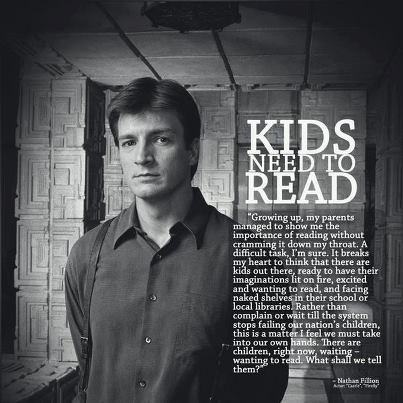
Nathan Fillion + Childhood Literacy

I've got about ten odd posts that have been floating around my gray matter for weeks, but time and space have not been aplenty. Thus, I leave you with this gem:


More info about "Kids Need to Read," a Fillion brainchild, can be found here and here

While I think literacy projects are great-as-can-be, I was a little disappointed at their official booklist, of which I recognized maybe 3% of the titles. This is probably just a sure fire re-confirmation that I am aging and not a children's/YA specialist, but I at least expected Huck Finn and some of the other classics to appear in non-graphic novel versions. I understand that they are targeting youth from mainly 'at-risk' communities, but these kids still deserve better. At least Twilight is nowhere to be found.